It's taken me a while to write a post I feel comfortable publishing. I'm not very good with 'personal' blogs. Informational? No problem. I've spent months writing stories. But write something personal? Why does that seem so scary. I don't want to write about things that no one will want to hear. Obviously, no one wants to hear about my little one's bowel movement patterns or nasal excretions, but if I keep this blog completely impersonal it won't be very interesting either. So where between those two things do I draw the line?
Maybe I should start by introducing myself. I'm the mother of an 11 week old little boy who is amazingly well behaved, and a complete blessing. We live with my darling husband, whom I met in high school. I'm a certified medical assistant, slowly getting back to taking classes to become an R.N. Tomorrow is actually my first day back finishing the credits for some classes I had to leave at the end of my pregnancy.
My husband and I had our first child fairly young, having our first child after we got married and I became a CMA. My mother had my sister and I when she was just about 30, and shortly after, became unable to have any more children. Evidence seems to suggest this is not a side-effect of her previous pregnancies, and likely would have occurred even if she had not yet had children. I have always wanted a family and to be a mother, and I did not want to wait to have children only to find myself in a situation where I could not, or where I would compromise the health of myself or my children to try. Still, I planned to wait until I was ready to have children. As it happens, we introduced our first child into the world this September.
My husband and I have been very fortunate. I became pregnant easily, and besides becoming slightly anemic, I had a wonderful pregnancy. I carried my son to 41 weeks before being induced, and gave birth to a beautiful, healthy boy. I recovered quickly after giving birth, and while breastfeeding exclusively, I've all ready gotten that lovely monthly notice that my body is once again fertile.
I still hope to have one or two more children, but afterward if fate allows, I would like to become a surrogate. I've thought about it in the past, and after having one successful pregnancy, have considered it further. Especially now, becoming part of the blogging community, and finding out about so many families that struggle to have children. There's so many reasons I want to do this, and after I have made my own family complete, I would like to help another family do the same.
Even now, with this blog, I hope in some way to help others out there making their own families, with some of my more informative posts. I hope that I can in some way make a difference and help support someone out there and to help make the wonderful experience of having a family that much easier or more enjoyable.
As you might have gathered from my previous posts, I am a strong believer in breastfeeding and as 'natural' an approach as possible when raising my child. I love cooking, and while I would love to be a Stay-at-Home Mom until my little one goes to school, I will be going to school, and likely working, at least part time.
I hope that some how, some day, I can make a difference in someone's life. I am trying every day to make a good life for my husband and son, and I am devoting myself to a career field where I will be able to help people on a daily basis, though of those things my family certainly does come first.
Showing posts with label baby. Show all posts
Showing posts with label baby. Show all posts
Sunday, December 12, 2010

Thursday, December 9, 2010
SIDS Facts You Might Not Know
SIDS (Sudden Infant Death Syndrome) is a heartbreaking, unexplainable tragedy that we have all heard of. While there is no known exact cause, research has found was to reduce the risk, and fortunately since the launch of the "Back to Sleep" campaign, the incidence of SIDS had decreased over 50%. But besides putting our babies to sleep on their backs, as opposed to the stomach or sides, what else can be done to prevent SIDS? While some risk factors are fairly obvious, others you might not expect.

First, the more obvious. Avoid cigarette smoke, both during pregnancy and direct or indirect exposure to your infant after birth. Use of street drugs during pregnancy also increases risk of SIDS.
Get good care early in pregnancy, assure good nutrition, and take the necessary vitamins.
Avoid becoming pregnant in the teen years. The more babies a mother has in her teen years, the more the risk for SIDS increased.
Premature babies are more likely to be victims of SIDS, take extra care if your baby is premature.

Some things you might not expect:
Not only is SIDS related to (seemingly) mild respiratory infections in some cases, gastrointestinal problems (such as vomiting and diarrhea) are also associated with a higher incidence of SIDS.
Wait AT LEAST one year between the birth of one child and the beginning of your next pregnancy. The closer your pregnancies, the higher the risk of SIDS.
Make sure the baby has a firm mattress. Do not use any sorts of blankets, covers, or bumpers. That's right, even blankets.

Let the baby sleep in the same room, but do not share a bed. Babies who sleep in a separate room have a higher incidence of SIDS.
Do not over-clothe your baby,just enough clothes to keep them warm without covers. Keep the room temperature comfortable but not too warm.. Overheating is also associated with a higher risk of SIDS.
Do not let your baby sleep on an adult bed, or other soft surface. and again, avoid covers.

Breastfeed! Studies show breastfed infants have a lower risk of SIDS!
A New Study shows low serotonin levels may be linked o SIDS, as babies may be less easily aroused from sleep.
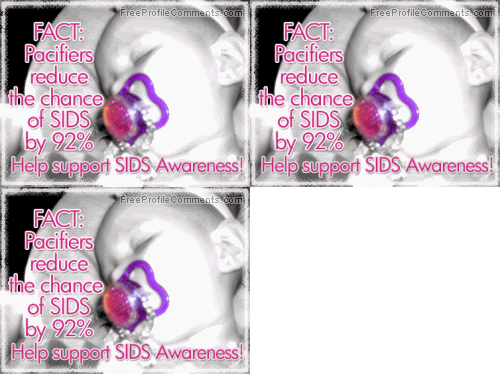
Offer a pacifier. It is also found that babies who use a pacifier show a lower incidence of SIDS.

Good Luck, and Best Wishes!

First, the more obvious. Avoid cigarette smoke, both during pregnancy and direct or indirect exposure to your infant after birth. Use of street drugs during pregnancy also increases risk of SIDS.
Get good care early in pregnancy, assure good nutrition, and take the necessary vitamins.
Avoid becoming pregnant in the teen years. The more babies a mother has in her teen years, the more the risk for SIDS increased.
Premature babies are more likely to be victims of SIDS, take extra care if your baby is premature.

Some things you might not expect:
Not only is SIDS related to (seemingly) mild respiratory infections in some cases, gastrointestinal problems (such as vomiting and diarrhea) are also associated with a higher incidence of SIDS.
Wait AT LEAST one year between the birth of one child and the beginning of your next pregnancy. The closer your pregnancies, the higher the risk of SIDS.
Make sure the baby has a firm mattress. Do not use any sorts of blankets, covers, or bumpers. That's right, even blankets.

Let the baby sleep in the same room, but do not share a bed. Babies who sleep in a separate room have a higher incidence of SIDS.
Do not over-clothe your baby,just enough clothes to keep them warm without covers. Keep the room temperature comfortable but not too warm.. Overheating is also associated with a higher risk of SIDS.
Do not let your baby sleep on an adult bed, or other soft surface. and again, avoid covers.

Breastfeed! Studies show breastfed infants have a lower risk of SIDS!
A New Study shows low serotonin levels may be linked o SIDS, as babies may be less easily aroused from sleep.
Offer a pacifier. It is also found that babies who use a pacifier show a lower incidence of SIDS.
Good Luck, and Best Wishes!
Wednesday, December 8, 2010
Home-made Baby Food: A Natural Start to Solids
Lately I've been getting a lot of questions about my plans for when to start my son on solids, and while I plan to continue the recommended 6 months of exclusive breastfeeding, it's had me thinking a lot about what I'll feed him when he is ready for solids. I found this wonderful website about Homemade Baby Food that has me excited at the idea.

While there are many new, 'organic' options out there for store-bought baby food, making your own baby food with ingredients you buy yourself is not only less expensive, but everyone knows there's nothing like fresh, homemade food.

But what about the iron and vitamins that are added to comercial baby food products? Usually, breastfed babies won't need supplement, but if you talk to your pediatrician they can give you prescriptions for vitamins and iron that comes in liquid form that can be added to you baby's food or given separately with a dropper.
For mothers who spend the months breastfeeding and forming that special bond with their little one, they often find it difficult when they switch their little ones to solid food who no longer depend on them for their nutrition. Not only do you get to make your baby food full of love :) you can thin out your purees with breast milk for added benefit!

While thinking about Homemade baby food might bring you visions of messy kitchen and stressed preparation, it's easier than you may think. Foods like bananas like avocado are so soft they only require peeling and light mashing with a fork! For younger babies you may choose to water down this puree with the liquid of your choice, but if you wait the recommended 6 months before introducing solids, this shouldn't be a problem.

Not only are avocados easy to prepare, they are an excellent form of nutrition for you little one, and are even an good alternative as a first food opposed to the traditional baby cereal. It has be found that breastfed infants especially may benefit from starting on solids that are not cereals, and this fact has been recognized by La Leche League and others. While you may choose to stick with tradition, you should still consider adding avocados to your baby's diet. They have nearly all the vitamins and minerals your little one will need, and the website I mentioned above has a full page outlining their benefits. For some reason, I can't find commercial avocado baby food, probably due to the tendency of avocados to brown quickly after peeling, it would be hard to find a way to keep it fresh long enough to sell.
There are so many wonderful recipes out there for baby food that you can't find sold in stores. Let your baby experience new tastes all made with love and fresh ingredients! Good Luck, and Best Wishes!

While there are many new, 'organic' options out there for store-bought baby food, making your own baby food with ingredients you buy yourself is not only less expensive, but everyone knows there's nothing like fresh, homemade food.

But what about the iron and vitamins that are added to comercial baby food products? Usually, breastfed babies won't need supplement, but if you talk to your pediatrician they can give you prescriptions for vitamins and iron that comes in liquid form that can be added to you baby's food or given separately with a dropper.
For mothers who spend the months breastfeeding and forming that special bond with their little one, they often find it difficult when they switch their little ones to solid food who no longer depend on them for their nutrition. Not only do you get to make your baby food full of love :) you can thin out your purees with breast milk for added benefit!

While thinking about Homemade baby food might bring you visions of messy kitchen and stressed preparation, it's easier than you may think. Foods like bananas like avocado are so soft they only require peeling and light mashing with a fork! For younger babies you may choose to water down this puree with the liquid of your choice, but if you wait the recommended 6 months before introducing solids, this shouldn't be a problem.

Not only are avocados easy to prepare, they are an excellent form of nutrition for you little one, and are even an good alternative as a first food opposed to the traditional baby cereal. It has be found that breastfed infants especially may benefit from starting on solids that are not cereals, and this fact has been recognized by La Leche League and others. While you may choose to stick with tradition, you should still consider adding avocados to your baby's diet. They have nearly all the vitamins and minerals your little one will need, and the website I mentioned above has a full page outlining their benefits. For some reason, I can't find commercial avocado baby food, probably due to the tendency of avocados to brown quickly after peeling, it would be hard to find a way to keep it fresh long enough to sell.
There are so many wonderful recipes out there for baby food that you can't find sold in stores. Let your baby experience new tastes all made with love and fresh ingredients! Good Luck, and Best Wishes!
Monday, December 6, 2010
The Challenege of Breastfeeding: You CAN Do It
There's so many good reasons to want to breastfeed. It is recommended that a baby exclusively breastfeeds for the first 6 months. It gives your baby valuable immunities, helps the mother's body get back to normal after giving birth, and creates such a special bond between mother and child. I'm not here to persuade anyone, but there are so many articles with evidence of the benefits of breastfeeding I find it hard to imagine why any mother would chose not to try.

Many mothers worry that they will not be able to create enough milk for their little one, especially if they have heard horror stories from other mothers who did not have the best experiences with breastfeeding, and ended up switching to formula. It's true, many mothers have trouble establishing a milk supply, but with time and effort, this problem can almost always be solved. There are many accounts of women being able to breastfeed twins, so it's very likely your body will be able to supply for just one.

It can take as much as 6 weeks, or possibly more if you face unusual challenges, to establish a good milk supply to get your little one gaining weight in the same ranges as formula-fed infants. Even when you are struggling to establish a milk supply, your baby should gain at least half an ounce a day. Even at this level though, your pediatrician may start to recommend supplements. If this happens, request to have an appointment in another 4-7days to re-evaluate your child's weight gain, and in the mean time look up tips online for increasing milk supply to help your child gain weight. If your pediatrician is still worried about your child's weight gain, you may have to start supplementing with formula, but continuing to supply as much as your child's nourishment with feeding as possible will help you keep up your milk supply, and possibly allow you to switch back to exclusive breastfeeding in the future.

Here are some tips that helped me when establishing a milk supply:
Most importantly, speak with a lactation consultant to ensure your baby has a good latch. Review with other lactation consultants if your baby has a weight gain problem. Follow up, make sure things are still going well. In addition to the consultant at your pediatrician's office, every hospital has at least one on call if you have any concerns. She's not just there for when you're in the hospital, don't be afraid to call! And of course your local WIC office also has lactation consultants ready to help, even if you are not on the WIC program.
Nurse from only one side per feeding. Some will tell you to try offering both sides, to stimulate both for milk production, but nursing from one side ensures your baby gets all of calorie-rich hind-milk to help your little one gain weight, and the more time you spend on one breast the more milk that breast is told to produce. Save the other breast for the next feeding.
After your little one finishes a feeding and refuses to drink any more, use a breast pump to express as much milk as you can from that same breast. Leave the pump going for a few minutes even after the last drop of milk is released, this provides extra stimulation to signal to your milk ducts to produce more. DO NOT feed this expressed milk to your little one, store it away. There are plenty of articles online telling you how to store breast milk. Using a bottle to feed this expressed milk will take away from the time your baby spends on the breast. The stored milk will come in especially useful if your pediatrician does recommend supplements, as it will help you prevent introducing formula to your baby. Again, leave the other breast full for the next feeding.
Feed frequently! Even if your little one is sleeping or seems uninterested in feeding, babies will continue to suckle instinctively, even while sleeping, once you get them latched on. Feed a minimum of every 2 hours. If your pediatrician is concerned with weight gain, this goes for night time feedings too! Every. Two. Hours. Don't worry, it won't last forever. Actually, it should only take a few days before you can go back to slightly longer night time sleeping. How will you do it, you may ask? Take a 'nursing vacation' Go to bed for 2-3 days, with your baby in a co-sleeper or bassinet by the bedside. Relax, watch TV, use the internet, read, eat and drink plenty of liquids. Take naps whenever your baby is sleeping. The extra time in bed will more than account for the frequency of feedings you wake up for, and by the end of it you should have a much more luck with your milk supply.
The most important thing is DON'T GIVE UP. Most mothers I know who switched to formula did so within the first few weeks, before they ever had a chance to get their milk supply up.

Reasons women stop breastfeeding, and how you can work around them:
Illness. In some cases, mothers become sick, and can not take the exhaustion of waking up every two hours on their bodies, not only weak from giving birth but compounded by illness. If you can stick it out though, please try. Remember all the women who have done it back when there was no formula! Even when you are ill, your body will continue to produce enough milk for the baby. Whether you continue to breastfeed is usually determined not by physical limitations but by your ability to continue through exhaustion and stress.
Medication. Related to the one before this. Most mothers are under the impression that they can not take any kind of medicaton while breastfeeding for fear that it will be passed through the milk to their child. The truth is there are very few medications that will prevent you from breastfeeding, the warning medications put on their boxes is to precautionary. Call your child's pediatrician, as they will know most which medications will effect your child.
Pain. Now, most articles on breastfeeding will warn you of 'fullness' or 'soreness' when your milk starts coming in. What they don't mention is the pain so sharp that it makes you jump out of your skin and nearly sends you through the roof. The good news, it isn't constant pain, it only lasts for a few seconds to a few minutes at the beginning of a feed, while your little one is suckling on empty ducts that haven't figured out when they need to be full yet. More good news is, it's very temporary, often lasting less than a day, though it can continue for a few days. Unfortunately for those of you out there who are unlucky, the intensity of that pain can seem torture, even if it only last 12 short hours, when you add it too the exhaustion from giving birth and being woken up at regular intervals, its extremely tempting to grab some formula. Remember, even when it seems at its worse, that it WILL go away, and breastfeeding will soon become a comforting, soothing experience for you.
Returning to work. Most countries in the world offer ample amounts of maternity leave, ranging from 6 months to several years, the majority of which is paid. While living in the United States does not guaranteed you this much, there is luckily one law in place to help. The Family Medical Leave Act allows for up to 12 weeks of unpaid leave, so if that's how long it takes for you to establish breastfeeding, take that time, and know your rights. Also, the law generally requires a break every 4 hours, which is how often you will need to pump milk to prevent overfilling and clogged milk ducts, which could lead to infection. More good news is thanks to the recent health care bill, companies with more than 50 employees will soon have to provide a private space other than a bathroom for the purpose of letting nursing mothers express breast milk.
Flat or Inverted nipples. I admit I don't have much experience is this area but This Website has wonderful advice.
Babies breastfeed, not "nipple-feed", and if a baby is able to take in a good mouthful of breast, most types of inverted or flat nipples will not cause a problem during breastfeeding. However, some types of nipples are harder for the baby to latch onto, especially at first, but in most cases, patience, persistence, proper latch-on technique, and perhaps a few other helpful measures will pay off.
Babies with physical or mental barriers. The most common issue with breastfeeding is a baby born with tongue-tie. I have tongue-tie and my son has inherited a moderate case of it. He had difficulty latching on correctly at first, but with time and practice, things got better without medical intervention. It took 3 weeks for him to gain enough weight to hit the minimum level of 1/2 oz a day, and by 6 weeks he was gaining right along average with other babies his age. Of course, babies can have much bigger barriers to overcome. Though an uncommon condition This is one of my favorite success stories.
When trying to establish a good latch, especially when barriers are present for either mother or child, it is important to remember that babies are tired and very groggy after the birthing process. Studies have shown babies whose mothers received epidurals have a harder time latching on, and if you were given a spinal block or other anesthesia, it will only increase this effect. Add this to the physical limitations of mother or child, and the result is a several week or even months long process at teaching a baby a proper latch. And once a child gets used to bottles, espcially if the bottle was introduced prior to 2 weeks, nipple confusion only compounds the issue. As things pile up, it may be very difficult, and seemingly impossible, for you little one to breastfeed.
I want to make it clear that this post is NOT attacking mothers who choose not to breastfeed, or those who begin breastfeeding but switch to formula for any of the reasons listed above, or for any other reasons. There's always some things that just can't be helped, from psychical complications with the mother, to issues preventing a baby from obtaining or sustaining a sufficient latch, but there are more and more devices and techniques out there to help people in these situations and with the right support and determination, breastfeeding may still be a success, though it will be a much more difficult road. I understand that not everyone is as fortunate as I am, and that over half of mothers who begin breastfeeding switch partially or completely to formula by the time their child is three months old. I was fortunate enough to have to support that I did that allowed me to continue exclusively breastfeeding, and I merely wish to extend the same support to mothers out there that are hoping to accomplish the same thing. It IS possible, and the more you believe that, the more likely you are to succeed.
Good Luck, and Best Wishes!

Many mothers worry that they will not be able to create enough milk for their little one, especially if they have heard horror stories from other mothers who did not have the best experiences with breastfeeding, and ended up switching to formula. It's true, many mothers have trouble establishing a milk supply, but with time and effort, this problem can almost always be solved. There are many accounts of women being able to breastfeed twins, so it's very likely your body will be able to supply for just one.

It can take as much as 6 weeks, or possibly more if you face unusual challenges, to establish a good milk supply to get your little one gaining weight in the same ranges as formula-fed infants. Even when you are struggling to establish a milk supply, your baby should gain at least half an ounce a day. Even at this level though, your pediatrician may start to recommend supplements. If this happens, request to have an appointment in another 4-7days to re-evaluate your child's weight gain, and in the mean time look up tips online for increasing milk supply to help your child gain weight. If your pediatrician is still worried about your child's weight gain, you may have to start supplementing with formula, but continuing to supply as much as your child's nourishment with feeding as possible will help you keep up your milk supply, and possibly allow you to switch back to exclusive breastfeeding in the future.

Here are some tips that helped me when establishing a milk supply:
Most importantly, speak with a lactation consultant to ensure your baby has a good latch. Review with other lactation consultants if your baby has a weight gain problem. Follow up, make sure things are still going well. In addition to the consultant at your pediatrician's office, every hospital has at least one on call if you have any concerns. She's not just there for when you're in the hospital, don't be afraid to call! And of course your local WIC office also has lactation consultants ready to help, even if you are not on the WIC program.
Nurse from only one side per feeding. Some will tell you to try offering both sides, to stimulate both for milk production, but nursing from one side ensures your baby gets all of calorie-rich hind-milk to help your little one gain weight, and the more time you spend on one breast the more milk that breast is told to produce. Save the other breast for the next feeding.
After your little one finishes a feeding and refuses to drink any more, use a breast pump to express as much milk as you can from that same breast. Leave the pump going for a few minutes even after the last drop of milk is released, this provides extra stimulation to signal to your milk ducts to produce more. DO NOT feed this expressed milk to your little one, store it away. There are plenty of articles online telling you how to store breast milk. Using a bottle to feed this expressed milk will take away from the time your baby spends on the breast. The stored milk will come in especially useful if your pediatrician does recommend supplements, as it will help you prevent introducing formula to your baby. Again, leave the other breast full for the next feeding.
Feed frequently! Even if your little one is sleeping or seems uninterested in feeding, babies will continue to suckle instinctively, even while sleeping, once you get them latched on. Feed a minimum of every 2 hours. If your pediatrician is concerned with weight gain, this goes for night time feedings too! Every. Two. Hours. Don't worry, it won't last forever. Actually, it should only take a few days before you can go back to slightly longer night time sleeping. How will you do it, you may ask? Take a 'nursing vacation' Go to bed for 2-3 days, with your baby in a co-sleeper or bassinet by the bedside. Relax, watch TV, use the internet, read, eat and drink plenty of liquids. Take naps whenever your baby is sleeping. The extra time in bed will more than account for the frequency of feedings you wake up for, and by the end of it you should have a much more luck with your milk supply.
The most important thing is DON'T GIVE UP. Most mothers I know who switched to formula did so within the first few weeks, before they ever had a chance to get their milk supply up.
Reasons women stop breastfeeding, and how you can work around them:
Illness. In some cases, mothers become sick, and can not take the exhaustion of waking up every two hours on their bodies, not only weak from giving birth but compounded by illness. If you can stick it out though, please try. Remember all the women who have done it back when there was no formula! Even when you are ill, your body will continue to produce enough milk for the baby. Whether you continue to breastfeed is usually determined not by physical limitations but by your ability to continue through exhaustion and stress.
Medication. Related to the one before this. Most mothers are under the impression that they can not take any kind of medicaton while breastfeeding for fear that it will be passed through the milk to their child. The truth is there are very few medications that will prevent you from breastfeeding, the warning medications put on their boxes is to precautionary. Call your child's pediatrician, as they will know most which medications will effect your child.
Pain. Now, most articles on breastfeeding will warn you of 'fullness' or 'soreness' when your milk starts coming in. What they don't mention is the pain so sharp that it makes you jump out of your skin and nearly sends you through the roof. The good news, it isn't constant pain, it only lasts for a few seconds to a few minutes at the beginning of a feed, while your little one is suckling on empty ducts that haven't figured out when they need to be full yet. More good news is, it's very temporary, often lasting less than a day, though it can continue for a few days. Unfortunately for those of you out there who are unlucky, the intensity of that pain can seem torture, even if it only last 12 short hours, when you add it too the exhaustion from giving birth and being woken up at regular intervals, its extremely tempting to grab some formula. Remember, even when it seems at its worse, that it WILL go away, and breastfeeding will soon become a comforting, soothing experience for you.
Returning to work. Most countries in the world offer ample amounts of maternity leave, ranging from 6 months to several years, the majority of which is paid. While living in the United States does not guaranteed you this much, there is luckily one law in place to help. The Family Medical Leave Act allows for up to 12 weeks of unpaid leave, so if that's how long it takes for you to establish breastfeeding, take that time, and know your rights. Also, the law generally requires a break every 4 hours, which is how often you will need to pump milk to prevent overfilling and clogged milk ducts, which could lead to infection. More good news is thanks to the recent health care bill, companies with more than 50 employees will soon have to provide a private space other than a bathroom for the purpose of letting nursing mothers express breast milk.
Flat or Inverted nipples. I admit I don't have much experience is this area but This Website has wonderful advice.
Babies breastfeed, not "nipple-feed", and if a baby is able to take in a good mouthful of breast, most types of inverted or flat nipples will not cause a problem during breastfeeding. However, some types of nipples are harder for the baby to latch onto, especially at first, but in most cases, patience, persistence, proper latch-on technique, and perhaps a few other helpful measures will pay off.
Babies with physical or mental barriers. The most common issue with breastfeeding is a baby born with tongue-tie. I have tongue-tie and my son has inherited a moderate case of it. He had difficulty latching on correctly at first, but with time and practice, things got better without medical intervention. It took 3 weeks for him to gain enough weight to hit the minimum level of 1/2 oz a day, and by 6 weeks he was gaining right along average with other babies his age. Of course, babies can have much bigger barriers to overcome. Though an uncommon condition This is one of my favorite success stories.
When trying to establish a good latch, especially when barriers are present for either mother or child, it is important to remember that babies are tired and very groggy after the birthing process. Studies have shown babies whose mothers received epidurals have a harder time latching on, and if you were given a spinal block or other anesthesia, it will only increase this effect. Add this to the physical limitations of mother or child, and the result is a several week or even months long process at teaching a baby a proper latch. And once a child gets used to bottles, espcially if the bottle was introduced prior to 2 weeks, nipple confusion only compounds the issue. As things pile up, it may be very difficult, and seemingly impossible, for you little one to breastfeed.
I want to make it clear that this post is NOT attacking mothers who choose not to breastfeed, or those who begin breastfeeding but switch to formula for any of the reasons listed above, or for any other reasons. There's always some things that just can't be helped, from psychical complications with the mother, to issues preventing a baby from obtaining or sustaining a sufficient latch, but there are more and more devices and techniques out there to help people in these situations and with the right support and determination, breastfeeding may still be a success, though it will be a much more difficult road. I understand that not everyone is as fortunate as I am, and that over half of mothers who begin breastfeeding switch partially or completely to formula by the time their child is three months old. I was fortunate enough to have to support that I did that allowed me to continue exclusively breastfeeding, and I merely wish to extend the same support to mothers out there that are hoping to accomplish the same thing. It IS possible, and the more you believe that, the more likely you are to succeed.
Good Luck, and Best Wishes!
Sunday, December 5, 2010
Buying for your Bundle of Joy: Advice for First Time Moms
So you're expecting a little one, congratulations! There's some things you're going to hear over and over again, about being prepared for sleepless nights and not having time for yourself, because its not about you any more. This blog isn't about those things. It's less about the concept of parenthood and more about those items that will make it easier.

If you're anything like I was, you're going to obsess over exactly which items to put on your baby registry. You're going to see the cutest thing, and you're going to want exactly what you want. This is a mistake, and you will realize how unimportant your pickiness was soon after baby arrives, because as cute as that Thing You Love is, that Thing You're Not So Crazy About But Serves The Same Purpose will look just as cute when your little bundle of joy is using it. Don't get me wrong, RESEARCH, know which BRAND of item that you want, but don't get too caught up on details like color or design, and don't go overly expensive when there's a brand of equal quality for a more reasonable price that someone will buy it for.

Again, if you're like me, you have people in your family who are picky about where they shop for you, and they want you to create a registry that is not at your Dream Store. Do yourself a favor and make a registry there, because they are going to shop there whether you like it or not and at least this way you can make sure what they buy you from there is something you can use. Create a second registry at the store you want for those who are more willing to listen to you wishes, but trust me when I say it's worth the trouble.
Now while I've all ready mentioned the importance of researching the items on your registry, or the items you will ultimately purchase for you little one, I also know there's nothing like advice from someone with experience. And while your mothers and older relatives will be of great help, most of them know little about the newest brands and items out there for babies.
Let's get started.
The most important thing, and something I now realize I should have researched more BEFORE the baby arrived: what brand of diapers will you use? Not all diapers are equal! I got an assortment of brands at my shower and the only diapers that seem NOT to leak on a regular basis were Pampers and Huggies, and even still, Pampers is far better at drawing moisture away from the skin and preventing irritation. Huggies brags about their more comfortable shape, but when your child is newborn and no where near crawling age, trust me, the higher risk of a diaper rash definitely make Huggies LESS comfortable. Perhaps Huggies will be better for older babies, who are more mobile, and don't require so many frequent diaper changes, but I've yet to reach that point with my son.

The next most important thing: wipes. This is the area that Huggies excels in, nothing compares. I'll admit, I haven't tried the pampers brand, but that's because I can't really find many stores that carry Pampers wipes, Huggies is by far more popular.

Other things you'll want for diaper changing, besides that table to match the baby furniture set you love, or the stylish diaper bag you've got your eye on is a portable waterproof changing pad and a refillable small on the go wipes container. You'll also want to invest in carry-size hand sanitizer bottles for when you are not near a sink.

And of course: DIAPER RASH OINTMENT! If you are the type to buy brand names, go for Desitin, but a generic brand equivalent will work just as well if you compare the ingredients. Look for zinc oxide and make sure it's not water based, or urine will wash it away.

And don't forget to get a good diaper pail to have next to your changing table at home, look for ones that are more air-tight to eliminate odor, such as the Diaper Champ.

Now that we've gotten past the poopy business, now to eating! I am a firm believer of exclusive breastfeeding, so the following advice will be for mothers who at least partially provide nutrition for their babies through nursing.
An absolute MUST for breastfeeding is the boppy pillow, or a pillow with similar shape. It provides much needed support and saves you A LOT of muscle soreness. It's also nice to prop your little one up against before the develop the support to hold themselves up or use chairs.

You will also need an insulated bag for transporting breast milk when you are away from refrigeration, conveniently sized, reusable icepack, and freezer safe storage containers to match whatever breast pump you choose to use.

As far as bottles go I recommend Playtex with wide nipples. Drop-ins or VentAire will prevent your baby from swallowing too much gas, and the wide nipples helps prevent nipple confusion.

For those of you out there who have trouble affording an electric breast pump, which can possibly be the most expensive item on your list, and aren't lucky enough to have a state Medicaid insurance that provides one for you, they can be rented from WIC for $10-$20 a month.
UPDATE: After some research on starting my baby on solids, I've decided I'm going to make all his baby food for him. For more information see my post on homemade baby food. If this is something you'd like to do, then you need a food processor and baby food freezer trays (though regular ice cube trays could also suffice).

Last on the essentials list is items for your babies health you'll want to make sure you have before you bring your little one home. A multi-purpose thermometer. Rectal temperatures are the most accurate, and there for the ones doctors will recommend you use, but if you're just looking for a quick reference axillary (underarm) temperature will come in handy. Keep in mind that your newborn won't be able to take temperatures orally or have ear canals big enough for temperatures by that route for quite some time.

You'll want to have a pair of baby nail trimmers, as your little cutie can have quite the set of claws on them when they arrive, and if you don't want the scratching up their perfect little face, it will be a necessity.

Lastly, make sure you have infant Tylenol (or whichever infant pain reliever/ fever reducer your pediatrician recommends) because if your baby gets sick unexpectedly in their first few weeks home, you won't want to run out in the middle of the night to get it.

Now, past the basics and on to the fun stuff! Pacifiers for newborns are quite different from the majority of the pacifiers you will find out there. Most are made for larger mouth with teeth, and have much tougher nipples. The only ones my newborn would take were the Soothie pacifier they give you at the hospital, but you can find it at most superstores (Walmart, Target, etc) Be careful not to buy the Super Soothie, as those are made out of thicker plastic for one your baby gets teeth.

Now Soothie pacifiers have these wonderful things called Wubbanubs, where they are connected to adorable stuffed animals make it so they stay in your child's mouth SOOOO much easier when they are too young to keep it in by themselves. Not only are they adorable, but they are helpful. By far one of my favorite baby items. Unfortunately, you'll probably have to order one online if you want one, but in my opinion it's worth it if you have the money to spare.

When it comes to picking out toys, mobiles, and playmats, keep in mind that a newborns don't have the best vision and the objects that will stimulate their vision are the earliest are black-and-white patterns with high contrast, and the color red. While pastels are adorable, bright primary colors will be much more stimulating to the youngest of little ones. And while you might love that animal themed toy, basic shapes like circles, triangles, and squares will be easier for your child to differentiate between.

You'll want at least one playmat to put on the floor for 'tummy time' Since it is recommended babies DO NOT sleep on their stomachs to prevent the risk of SIDS, babies will need increased awake time on their stomach, supervised by an adult. This will help them build the muscles necessary for pushing themselves up, and eventually crawling. It is recommended a baby gets at least 10 minutes of tummy time at least once a day.

Another item that you should have on your list is baby monitors. Get a set made by a brand associated with electronics, such as Sony, as these are usually more reliable and have less static. For convenience, look for monitors that are long-range, and are rechargeable, so you won't have to buy new batteries all the time.

Now, when it comes to bigger items like car seats and strollers, all I can say is what you want will depend on personal preference, but the most important thing is to choose a reliable brand. This is one thing you do NOT
want to skimp on. Same thing for cribs, though I recommend staying away from drop-side cribs, as they are so often recalled do to potential danger.

Something you might not think of is having a bassinet. Even if you play to set up the crib in the same room as you, a bassinet can be placed right up against your bedside at night, and moved out of the way during the day. It's worth it to you have your baby at arm's reach in those early weeks before they learn to sleep through the night, and it's especially convenient if you are breastfeeding.

Swings are nice for keeping your baby quiet, if you are lucky enough to have a child that will take to them, though I don't recommend any particular brand, just make sure, as always, that it is a reliable brand.
And lastly, you'll want to think about getting a baby carrier or sling to you use to keep your baby close without tiring your arms out, it will be especially helpful for those fussy times when they want to be held for hours on end.

Sometimes it seems hard to stay sane when preparing for you little bundle of joy, but in the end when it's all said and done and you get those quite moments to relax while they sleep, you'll be glad for the effort you took. Good luck, and best wishes!

If you're anything like I was, you're going to obsess over exactly which items to put on your baby registry. You're going to see the cutest thing, and you're going to want exactly what you want. This is a mistake, and you will realize how unimportant your pickiness was soon after baby arrives, because as cute as that Thing You Love is, that Thing You're Not So Crazy About But Serves The Same Purpose will look just as cute when your little bundle of joy is using it. Don't get me wrong, RESEARCH, know which BRAND of item that you want, but don't get too caught up on details like color or design, and don't go overly expensive when there's a brand of equal quality for a more reasonable price that someone will buy it for.

Again, if you're like me, you have people in your family who are picky about where they shop for you, and they want you to create a registry that is not at your Dream Store. Do yourself a favor and make a registry there, because they are going to shop there whether you like it or not and at least this way you can make sure what they buy you from there is something you can use. Create a second registry at the store you want for those who are more willing to listen to you wishes, but trust me when I say it's worth the trouble.
Now while I've all ready mentioned the importance of researching the items on your registry, or the items you will ultimately purchase for you little one, I also know there's nothing like advice from someone with experience. And while your mothers and older relatives will be of great help, most of them know little about the newest brands and items out there for babies.
Let's get started.
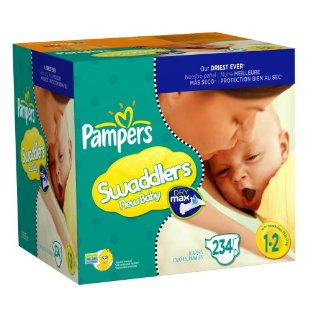
The most important thing, and something I now realize I should have researched more BEFORE the baby arrived: what brand of diapers will you use? Not all diapers are equal! I got an assortment of brands at my shower and the only diapers that seem NOT to leak on a regular basis were Pampers and Huggies, and even still, Pampers is far better at drawing moisture away from the skin and preventing irritation. Huggies brags about their more comfortable shape, but when your child is newborn and no where near crawling age, trust me, the higher risk of a diaper rash definitely make Huggies LESS comfortable. Perhaps Huggies will be better for older babies, who are more mobile, and don't require so many frequent diaper changes, but I've yet to reach that point with my son.
The next most important thing: wipes. This is the area that Huggies excels in, nothing compares. I'll admit, I haven't tried the pampers brand, but that's because I can't really find many stores that carry Pampers wipes, Huggies is by far more popular.
Other things you'll want for diaper changing, besides that table to match the baby furniture set you love, or the stylish diaper bag you've got your eye on is a portable waterproof changing pad and a refillable small on the go wipes container. You'll also want to invest in carry-size hand sanitizer bottles for when you are not near a sink.

And of course: DIAPER RASH OINTMENT! If you are the type to buy brand names, go for Desitin, but a generic brand equivalent will work just as well if you compare the ingredients. Look for zinc oxide and make sure it's not water based, or urine will wash it away.
And don't forget to get a good diaper pail to have next to your changing table at home, look for ones that are more air-tight to eliminate odor, such as the Diaper Champ.

Now that we've gotten past the poopy business, now to eating! I am a firm believer of exclusive breastfeeding, so the following advice will be for mothers who at least partially provide nutrition for their babies through nursing.
An absolute MUST for breastfeeding is the boppy pillow, or a pillow with similar shape. It provides much needed support and saves you A LOT of muscle soreness. It's also nice to prop your little one up against before the develop the support to hold themselves up or use chairs.
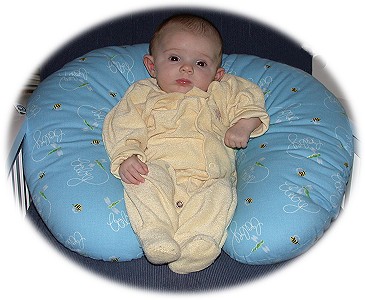
You will also need an insulated bag for transporting breast milk when you are away from refrigeration, conveniently sized, reusable icepack, and freezer safe storage containers to match whatever breast pump you choose to use.

As far as bottles go I recommend Playtex with wide nipples. Drop-ins or VentAire will prevent your baby from swallowing too much gas, and the wide nipples helps prevent nipple confusion.
For those of you out there who have trouble affording an electric breast pump, which can possibly be the most expensive item on your list, and aren't lucky enough to have a state Medicaid insurance that provides one for you, they can be rented from WIC for $10-$20 a month.
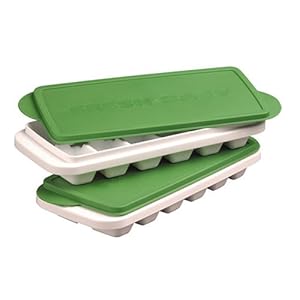
UPDATE: After some research on starting my baby on solids, I've decided I'm going to make all his baby food for him. For more information see my post on homemade baby food. If this is something you'd like to do, then you need a food processor and baby food freezer trays (though regular ice cube trays could also suffice).
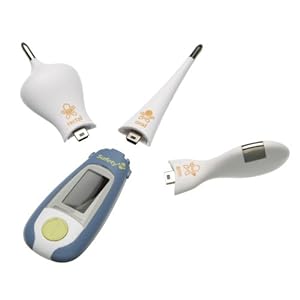
Last on the essentials list is items for your babies health you'll want to make sure you have before you bring your little one home. A multi-purpose thermometer. Rectal temperatures are the most accurate, and there for the ones doctors will recommend you use, but if you're just looking for a quick reference axillary (underarm) temperature will come in handy. Keep in mind that your newborn won't be able to take temperatures orally or have ear canals big enough for temperatures by that route for quite some time.
You'll want to have a pair of baby nail trimmers, as your little cutie can have quite the set of claws on them when they arrive, and if you don't want the scratching up their perfect little face, it will be a necessity.

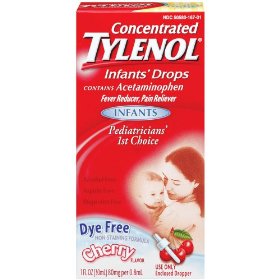
Lastly, make sure you have infant Tylenol (or whichever infant pain reliever/ fever reducer your pediatrician recommends) because if your baby gets sick unexpectedly in their first few weeks home, you won't want to run out in the middle of the night to get it.
Now, past the basics and on to the fun stuff! Pacifiers for newborns are quite different from the majority of the pacifiers you will find out there. Most are made for larger mouth with teeth, and have much tougher nipples. The only ones my newborn would take were the Soothie pacifier they give you at the hospital, but you can find it at most superstores (Walmart, Target, etc) Be careful not to buy the Super Soothie, as those are made out of thicker plastic for one your baby gets teeth.

Now Soothie pacifiers have these wonderful things called Wubbanubs, where they are connected to adorable stuffed animals make it so they stay in your child's mouth SOOOO much easier when they are too young to keep it in by themselves. Not only are they adorable, but they are helpful. By far one of my favorite baby items. Unfortunately, you'll probably have to order one online if you want one, but in my opinion it's worth it if you have the money to spare.
When it comes to picking out toys, mobiles, and playmats, keep in mind that a newborns don't have the best vision and the objects that will stimulate their vision are the earliest are black-and-white patterns with high contrast, and the color red. While pastels are adorable, bright primary colors will be much more stimulating to the youngest of little ones. And while you might love that animal themed toy, basic shapes like circles, triangles, and squares will be easier for your child to differentiate between.
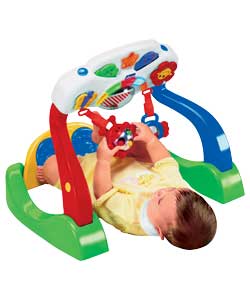
You'll want at least one playmat to put on the floor for 'tummy time' Since it is recommended babies DO NOT sleep on their stomachs to prevent the risk of SIDS, babies will need increased awake time on their stomach, supervised by an adult. This will help them build the muscles necessary for pushing themselves up, and eventually crawling. It is recommended a baby gets at least 10 minutes of tummy time at least once a day.

Another item that you should have on your list is baby monitors. Get a set made by a brand associated with electronics, such as Sony, as these are usually more reliable and have less static. For convenience, look for monitors that are long-range, and are rechargeable, so you won't have to buy new batteries all the time.

Now, when it comes to bigger items like car seats and strollers, all I can say is what you want will depend on personal preference, but the most important thing is to choose a reliable brand. This is one thing you do NOT
want to skimp on. Same thing for cribs, though I recommend staying away from drop-side cribs, as they are so often recalled do to potential danger.

Something you might not think of is having a bassinet. Even if you play to set up the crib in the same room as you, a bassinet can be placed right up against your bedside at night, and moved out of the way during the day. It's worth it to you have your baby at arm's reach in those early weeks before they learn to sleep through the night, and it's especially convenient if you are breastfeeding.

Swings are nice for keeping your baby quiet, if you are lucky enough to have a child that will take to them, though I don't recommend any particular brand, just make sure, as always, that it is a reliable brand.
And lastly, you'll want to think about getting a baby carrier or sling to you use to keep your baby close without tiring your arms out, it will be especially helpful for those fussy times when they want to be held for hours on end.

Sometimes it seems hard to stay sane when preparing for you little bundle of joy, but in the end when it's all said and done and you get those quite moments to relax while they sleep, you'll be glad for the effort you took. Good luck, and best wishes!
Subscribe to:
Posts (Atom)